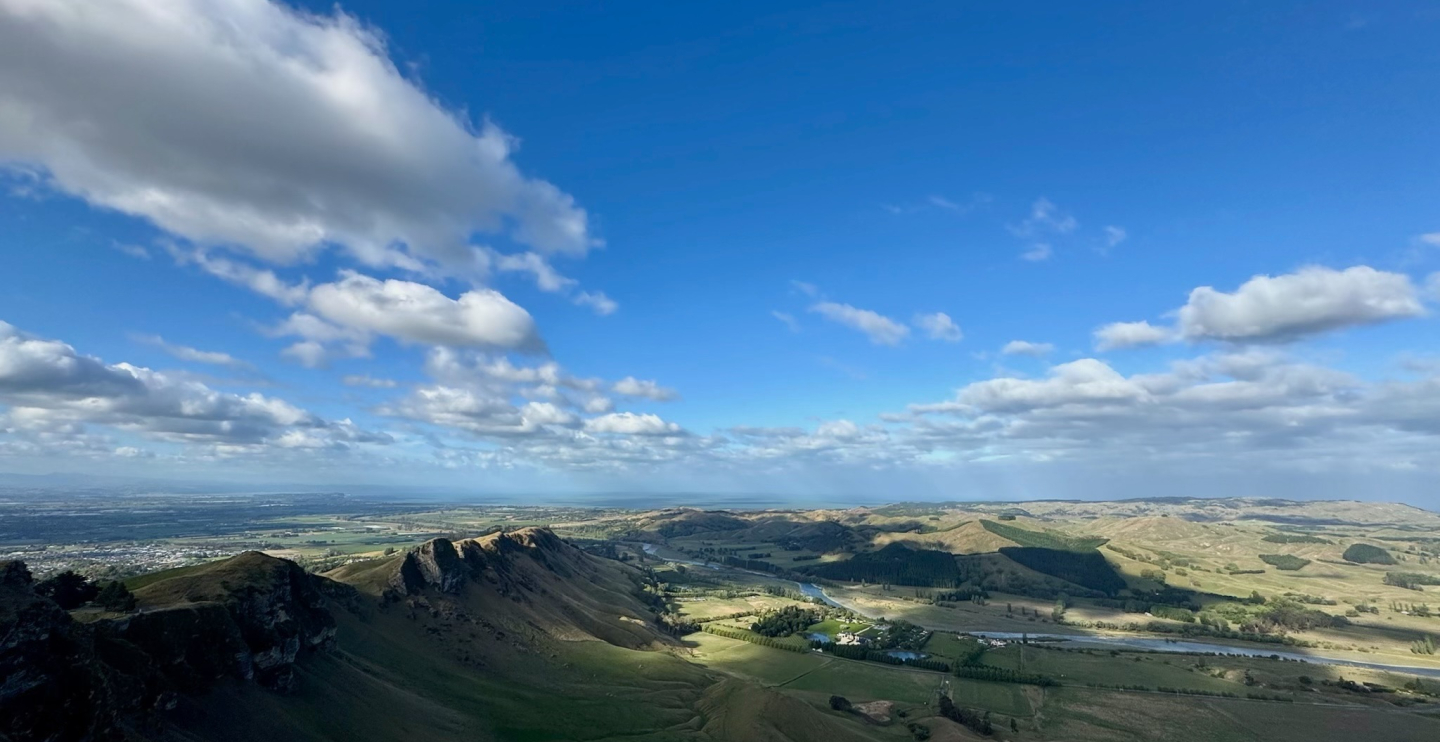
Indigenous Water and Energy Planning and Policy (Parts I and II) combines a fall seminar with a two-week Global Classroom in Aotearoa New Zealand.

Come to our info session on September 8th at 2:00PM to learn more! The info session will be located in the School of Architecture and Planning: W41-3101.

Contact - Jackie Paul (jaackiep [at] mit.edu

Program Information

This Global Classroom brings MIT students to Aotearoa New Zealand to engage with Indigenous approaches to climate resilience and community planning. Partnering with Pūrangakura Kaupapa Māori Research Centre and other local industry partners, students will contribute to Wai Ora, Kāinga Ora, a Māori-led research program addressing climate impacts on waterways and ecosystems essential to kāinga (home/community) wellbeing.

Kāinga (Māori cultural community sites), including marae and culturally significant sites, are traditionally located near waterways and face heightened vulnerability to climate change. Wai Ora, Kāinga Ora responds by co-creating place-based, community-led solutions grounded in mātauranga Māori (Māori knowledge systems) and intergenerational knowledge sharing.

Indigenous Water and Energy Planning and Policy (Parts I and II) bring MIT students into conversation with Indigenous approaches to climate resilience, community planning, water governance, energy systems, and environmental justice. The course combines a fall preparatory seminar at MIT with a two-week Global Classroom in Aotearoa New Zealand, where students will work alongside Māori professors, researchers, community leaders, and local partners. The Fall preparatory course will introduce topics of water and energy planning, Indigenous reflexivity and practice, and Maori specific Indigenous Community Planning. It will also serve as an introduction to the Maori community partners for the Aotearoa portion of the course. The course at MIT will be 6 credit units and start on October 20 (T-TH) and then conclude 8th of December. There will also be hour-long weekly meetings with our project client in New Zealand, so that students can make introductions and begin preparing the project.   

Over IAP students will travel to Auckland for 14 days for an additional 6 credit units. Students will work alongside Māori researchers and communities in Auckland and surrounding sites, participating in site visits to kāinga and waterways, engaging in collaborative project work, and learning kaupapa Māori research methodologies. The program culminates in a community wānanga (learning forum) where students present their contributions back to Māori researchers, community partners, and stakeholders, honoring the kaupapa Māori principle that research outputs return to the community.

This experience offers students a transformative opportunity to learn how Indigenous communities are leading climate action, not as subjects of study, but as knowledge holders and solution creators. By centering Māori perspectives on water, land, and community, students will develop new frameworks for understanding the intersection of planning, climate, and Indigenous sovereignty.

The program connects directly to MIT's Indigenous Planning course and advances MISTI's Climate and Sustainability priority area while fostering lasting relationships between MIT and Aotearoa's Indigenous planning community.

MIT Course Dates: October 20 - December 8, 2026 (T-TH)

In-Country Program Dates: January 18 - 31, 2027

Credit: This course is 12 units total. 

Find the Indigenous Water and Energy Planning and Policy Syllabus here.

Requirements:

  • Students should have experience or strong interest in working with and learning from communities.
  • Open to undergraduate and graduate students.

Application opens: September 2, 2026

Application deadline: October 26, 2026


Apply here


Program Fee: $1500

Financial Aid:

The program fee for this Global Classroom is $1500 per undergraduate student. Applications will be reviewed without regard for financial aid need. This amount will be pro-rated based on the financial needs of each selected student. Thus, a student receiving 100% financial aid from MIT will be able to attend the Global Classroom free of cost, while someone receiving 50% financial aid will have a $750 fee. The Global Classroom will cover airfare, in-country travel, accommodation, meals, and program activities. 

Graduate students are not eligible for financial aid.

Students will stay in a hotel where two students will share a room. 

Yes, students will need to register online with their passport. The program will provide guidance on this process.

There will be days that include a lot of walking (6+ hours). There will often be uneven terrain and steep inclines. Students with questions about accessibility are encouraged to contact Jackie Paul (jaackiep [at] mit.edu) and MIT Disability and Access Services (das-student [at] mit.edu (das-student[at]mit[dot]edu)) early to discuss accommodations.