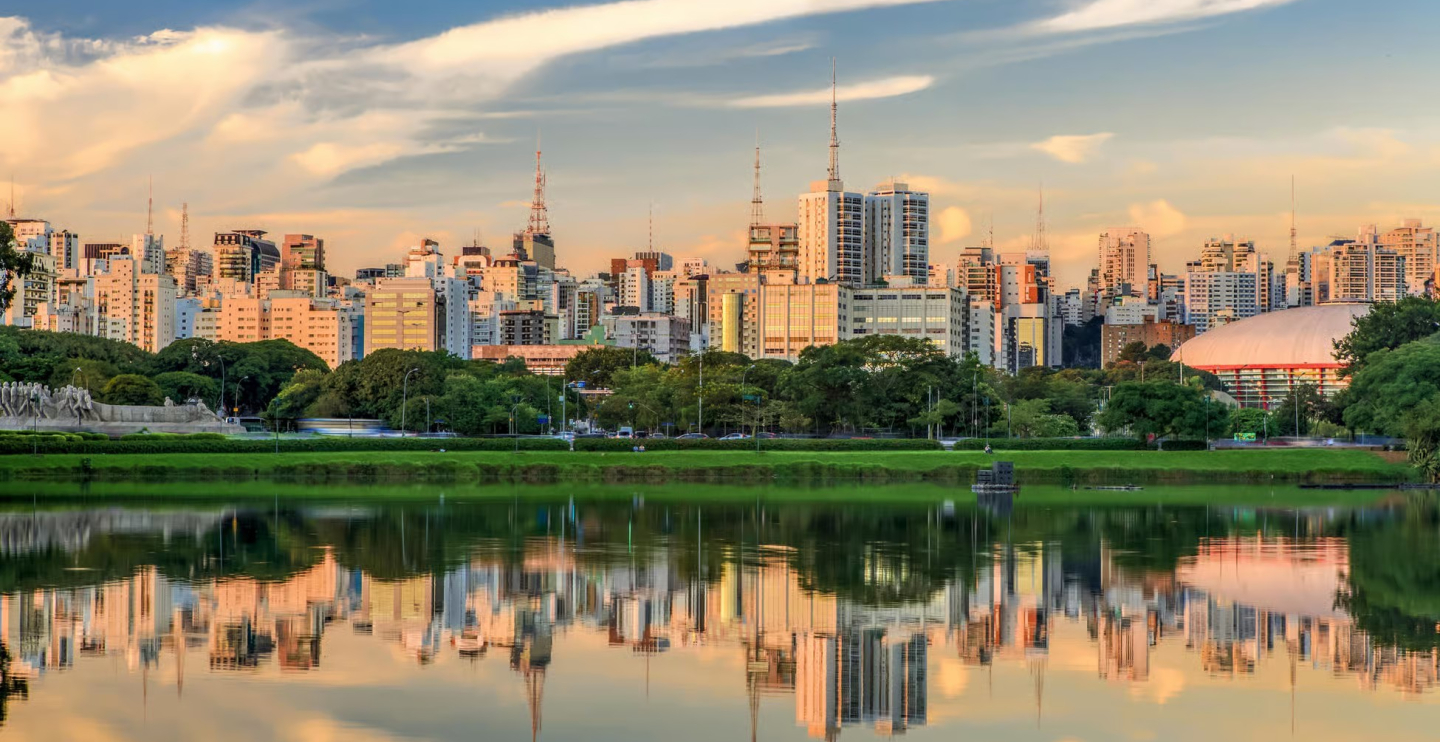
Race, Place, and Modernity in the Americas is an interdisciplinary course that immerses students in the history, culture, and arts of Sao Paulo through a comparative lens.

The Info Sessions will be on Thu 09/10/26 and Wed 09/16/26 at 5:15pm in 4-163.

Contact - Dr. Joaquin Terrones (jsterron [at] mit.edu)

Program Information

Based in São Paulo, this course examines the relationship between race and place in the formation of modern Brazil and the U.S. through comparative analysis and interdisciplinary study of literature, film, visual art, music, and performance.

We will visit key cultural and historical sites; interact with archives and museum collections; and, most importantly, engage in dialogue with local scholars, religious leaders, community organizers, and activists. 

Issues explored in the course materials and on-site activities include the legacy of transatlantic slavery, indigenous dispossession, urban segregation, environmental racism, and reparations. Focusing on the work of Black and Indigenous people, particularly women, the course places a strong emphasis on the ways in which art and cultural activism can have an impact on racial justice issues.

Program Dates: January 3-24, 2027

Credit: This course is 9 units. Course numbers include WGS.247J / 21L.592J / 21W.781J / 11.047J. 

Brazil is one of the most diverse nations on Earth, a mosaic of Indigenous, African, Asian, and European cultures and histories. It has the largest Black population outside of Africa, with more than half of Brazilians self-identifying as Black or mixed-race. Its Indigenous population numbers nearly 1.7 million across 391 distinct peoples, speaking 295 languages. São Paulo is one of the world's biggest cities and home to more Black people than any other city in the diaspora. Successive waves of migration have built Japanese, Italian, Lebanese, Bolivian, Haitian, and West and Central African communities that continue to remake the city. Brazil is also the most biodiverse country on the planet, with six major biomes and an estimated 15–20% of all known plant and animal species.

Requirements:

  • The course is taught entirely in English. No Portuguese needed.
  • No GPA minimum or pre-required courses.
  • This program is open to MIT undergraduate students only.

Application opens: September 2, 2026

Application deadline: September 30, 2026


Apply here

Program Fee: $1100

Additional Costs: 

Airfare, two meals per day (lunch and dinner), and local transportation within Sao Paulo (subway/bus or rideshare). Although these expenses are not included in the program fee, need-based financial aid WILL cover them.

Financial Aid:

The program fee for this Global Classroom is $1100 per undergraduate student. Applications will be reviewed without regard for financial aid need. This amount will be pro-rated based on the financial needs of each selected student. Thus, a student receiving 100% financial aid from MIT will be able to attend the Global Classroom free of cost, while someone receiving 50% financial aid will have a $550 fee. 

Financial aid will also cover expenses not included in program fee such as airfare and some meals.

Students will be house in double rooms in a long-stay hotel near Paulista Avenue in the heart of Sao Paulo.

Citizens of many countries in Latin America, the Caribbean, and Europe do not need a visa for Brazil. 

Citizens of the US, Canada, Australia, and China do need a visa but can apply online. Other visas are applied for at the consulate.

The program will help all students who need a visa apply for one.

Many buildings in Brazil are not as accessible as those at MIT. A couple of our activities will involve walking through the city for 1.5 - 3 hours. 

Students with questions about accessibility are encouraged to contact Dr. Joaquin Terrones (jsterron [at] mit.edu) and MIT Disability and Access Services (das-student [at] mit.edu (das-student[at]mit[dot]edu)) early to discuss accommodations.