

- November 16, 2026
- Stacy Vazquez, Course 18C '26
Chicken Nuggets, a Coke, and a side of Personal Growth
A significant chapter of my story is set in Mexico. Yet, up until college, my life took place in the United States. I longed for a place that I had never been to, a home that I had never set foot in.
I grew up in a Mexican household, a daughter to immigrants. I learned to love Mexican food from my mother’s cooking and to celebrate and honor the traditions surrounding El Día de Muertos, Noche Buena y Navidad, and El Día de Reyes. I never missed an episode of El Chavo Del Ocho or the numerous telenovelas that would run on Univisión. But, most importantly, I learned to value community and human connection through Mexican culture and costumbres. Throughout my upbringing, I felt a deep connection to Mexico.
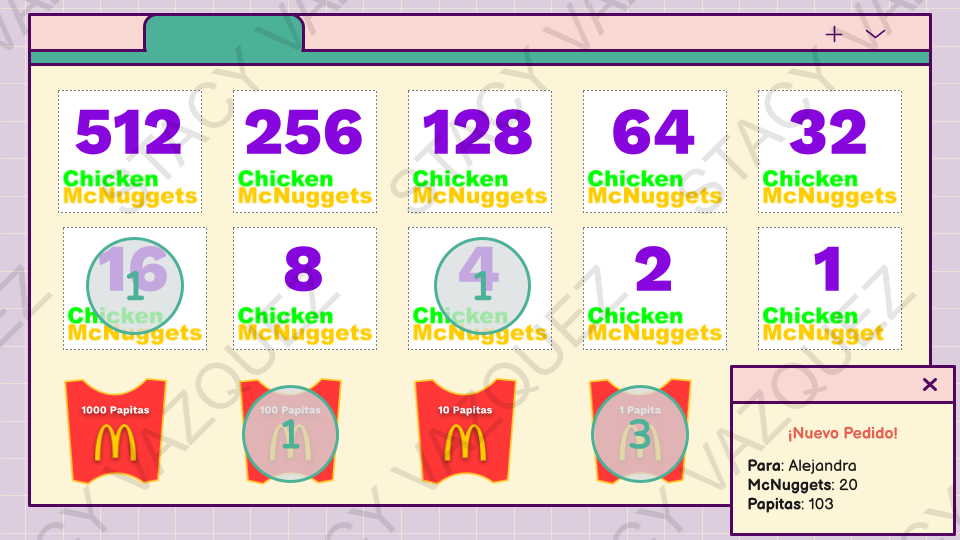
So, once I arrived at MIT and heard about an opportunity to teach my favorite subjects there through Global Teaching Labs (GTL), I didn’t think twice about applying. On October 5, 2024, I arrived at the fourth floor of E40 for my GTL interview with four french-fry containers and ten chicken-nugget boxes that I had carefully assembled from printer paper. I had a vision for a lesson on binary numbers and a mission to spend my sophomore-year IAP in Mexico. A few days later, I received an acceptance email that changed my MIT journey in the most rewarding way possible.
Beautiful Patterns and Stubborn Machines
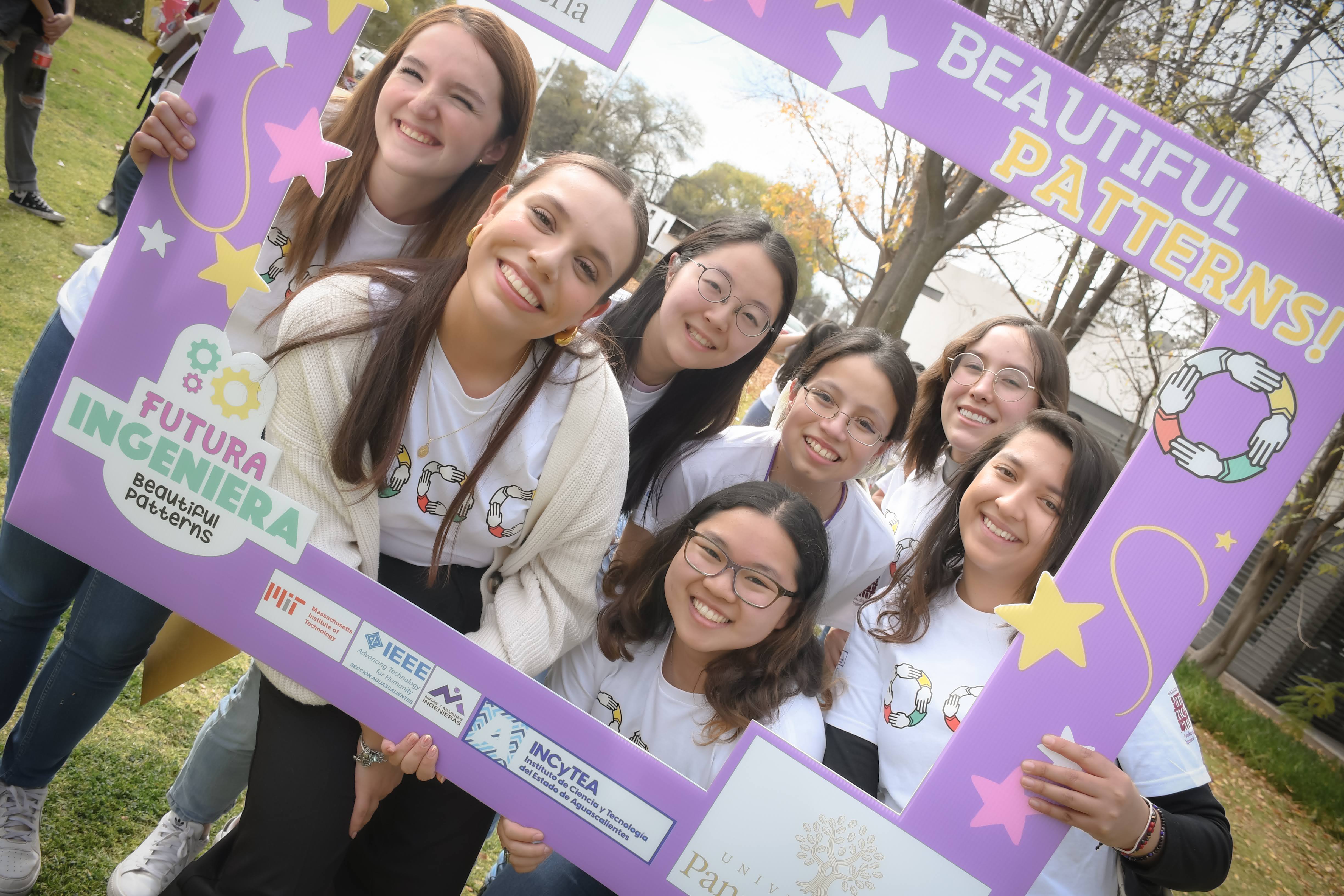
That IAP, I was as an instructor for the Beautiful Patterns bootcamp, an open-source initiative that aims to increase the representation of Latin American women in STEM fields by providing girls with educational opportunities and resources. This initiative has been picked up by several universities across Latin America, including el Tecnológico de Monterrey and my host institution, Universidad Panamericana.
Every year, Universidad Panamericana hosts two Beautiful Patterns (BP) bootcamps, one at its Mexico City campus and in Aguascalientes. In January 2024, I, along with two amazing girls—shoutout to Dana and Kathy <3—, traveled to the beautiful city of Aguascalientes to serve as instructors.
These two-week bootcamps aim to help young girls from local schools develop computational thinking and web programming skills. The BP curriculum covers a variety of topics including binary search and JavaScript programming. I was familiar with these topics from the courses I had taken at MIT. But, through this opportunity, I learned to appreciate them from a different perspective.
Being the instructor who was most fluent in Spanish, I was assigned to teach the youngest students. To my surprise, they were between the ages of 10 and 12 years old, many still in elementary school. At first, I worried that the learning goals were too ambitious for students who were this young, but I was hopeful that I could at least help them develop intuition for these concepts.
My students weren’t computer science undergraduates nor did they come from a programming background, so it was necessary for me to adjust the angle from which I approached teaching these concepts. Thankfully, from my GTL interview, I had a general idea of how to frame these topics within a non-technical context. Binary numbering was one of the topics in the curriculum, so I chose to expand upon my original lesson idea, using nuggets and fries. Hence, I created “Mathdonald’s” for binary numbers, “Recstlé” for recursion, and “Nijsan” for web development languages.
It was immensely rewarding to witness girls this young demonstrate computational reasoning. Naturally, they weren’t quite ready to tackle a college-level problem set, but they were able to translate between number systems and race over solving an instance of the tower of Hanoi. Through this experience, I was able to appreciate humanity’s innate intuition for computation and algorithmic thinking and how these abstractions are useful beyond computer programming.
Upon completion of the bootcamp, we changed gears towards a more engineering-heavy project: leading a cohort of students from local high schools to build a Rube Goldberg machine. Dana, Kathy, and I were computer science students, so this project certainly pushed us beyond our comfort zone as we tackled a hands-on build.
We decided to divide our thirty students into teams, encouraging them to collaborate with students from other schools. We asked that each team build a section of the machine, and each team was given a challenge element that they had to incorporate into their build. We, the instructors, worked across all teams, helping them strengthen their teamwork, experimentation, and physical reasoning skills. For the machine’s objective, we chose to hop on the Barbenheimer trend and have the participants build a complicated machine that placed a hat over a Barbie doll’s head.
Working with students who were in their junior and senior years of high school contrasted greatly with my experience as a BP instructor. In this project, students were more independent and challenged with becoming self-starters, troubleshooting their design, and applying classroom knowledge to an engineering task. Thus, my role shifted, and I focused on guiding through a complex task and working through the machine’s unpredictable behavior.
This project deeply strengthened my leadership skills and sharpened my teaching skills in a constructionist learning environment. At the end of the week, the students showcased the machine to their parents and UP’s faculty, marking the end of the program and the end of my GTL Mexico experience.
My GTL 2024 experience was very fulfilling pedagogically but even more so interpersonally. I loved connecting with my students, fellow instructors, our bootcamp lead Fernanda, the university’s faculty, and the program’s TAs. We explored the city and enjoyed a variety of delicious food (shout out to Fer for inviting us to chaskas after work). I had an incredible time in Aguascalientes. So much so that, when I was exploring opportunities for my sophomore year summer, a research listing at that same university caught my eye.
Dynamical Systems and Magical Towns
For my sophomore year summer, I wanted to dive into mathematics research and take on a more academic project in course 18C (mathematics with computer science). However, my credentials at the time reflected those of an MIT sophomore who had to fulfill a lot of GIRs and pre-requisites. So, it was especially important for me to find a project that suited my background.
During my search for a summer internship, I discovered a research project at Universidad Panamericana in Aguascalientes, the same institution that had hosted me earlier that year. The proposal was for a project in the field of dynamical systems and chaos theory, and the only prerequisite was 18.03 (differential equations)!
The project was led by physics and mathematics professor Dr. Hector E. Gilardi Velázquez and addressed disease transmission in interacting populations from a chaos theory lens. This listing felt like a shockingly good fit, as I was a math major pursuing a physics minor, and my high school calculus project described the mathematical modeling of epidemics (foreshadowing maybe?). I applied for the internship and was soon accepted.
That June, I returned to Aguascalientes, but, this time, I was accompanied by my close friend Ana, who was completing a research project in machine learning. We rented rooms in a neighborhood across the street from the university and had a taste of the student experience.
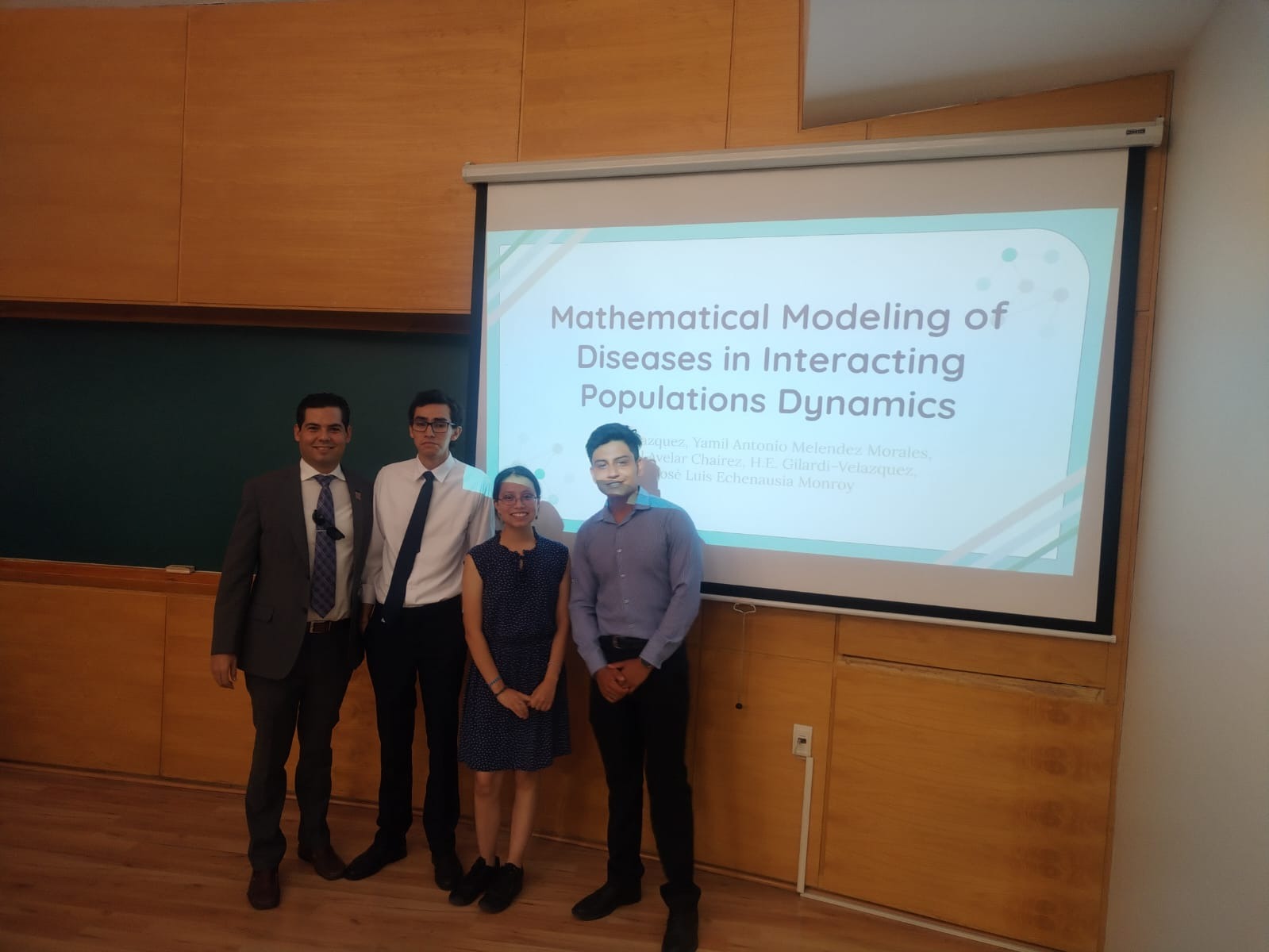
I collaborated on the project with two UP students, Yamil and Daniel, and our mentor Prof. Gilardi. We designed a model, studied its parameters, and ran numerous simulations to see how the model behaved over time. Our model described two populations that were connected by a migration rate and were experiencing an outbreak.
This project was especially formative for me because it was the first time that I tackled an open-ended research problem. It was up to us to decide our direction and interpret our results. Working well with ambiguity is an essential skill in both academic and non-academic career paths. By the end of the summer, we had collected our results and put together a presentation on our work. We presented it to faculty, and the project was showcased at the EDIESCA conference (the 5th International Conference on Complex Systems and Their Applications) later that year.
Beyond my research, I also had time to explore the city and state of Aguascalientes. We visited Calvillo, a pueblo mágico (magical town) known for its guava production, and Real de Asientos, another pueblo mágico and the oldest municipality in the state, where we explored a former convent, the oldest cemetery in Aguascalientes, and a church with underground tunnels. The city of Aguascalientes, the state capitol, is packed with beautiful places and traditions such as the museum of José Guadalupe Posada, creator of the famous catrina, and their plaza de toros, to name a few.
This summer holds endless memories and the beginning of incredible friendships with the students we worked with. Both of my experiences in Aguascalientes are characterized by the amazing hospitality of the faculty and community at Universidad Panamericana. I could not have asked for a better host institution, nor could I imagine a more rewarding time abroad.
Soft Drinks and Hard Skills
For the summer after my senior year, I was seeking an opportunity to work in industry. My first two experiences in Mexico were profoundly enriching, both professionally and culturally, so I was certain that MISTI Mexico still had a lot to offer me a third time around.
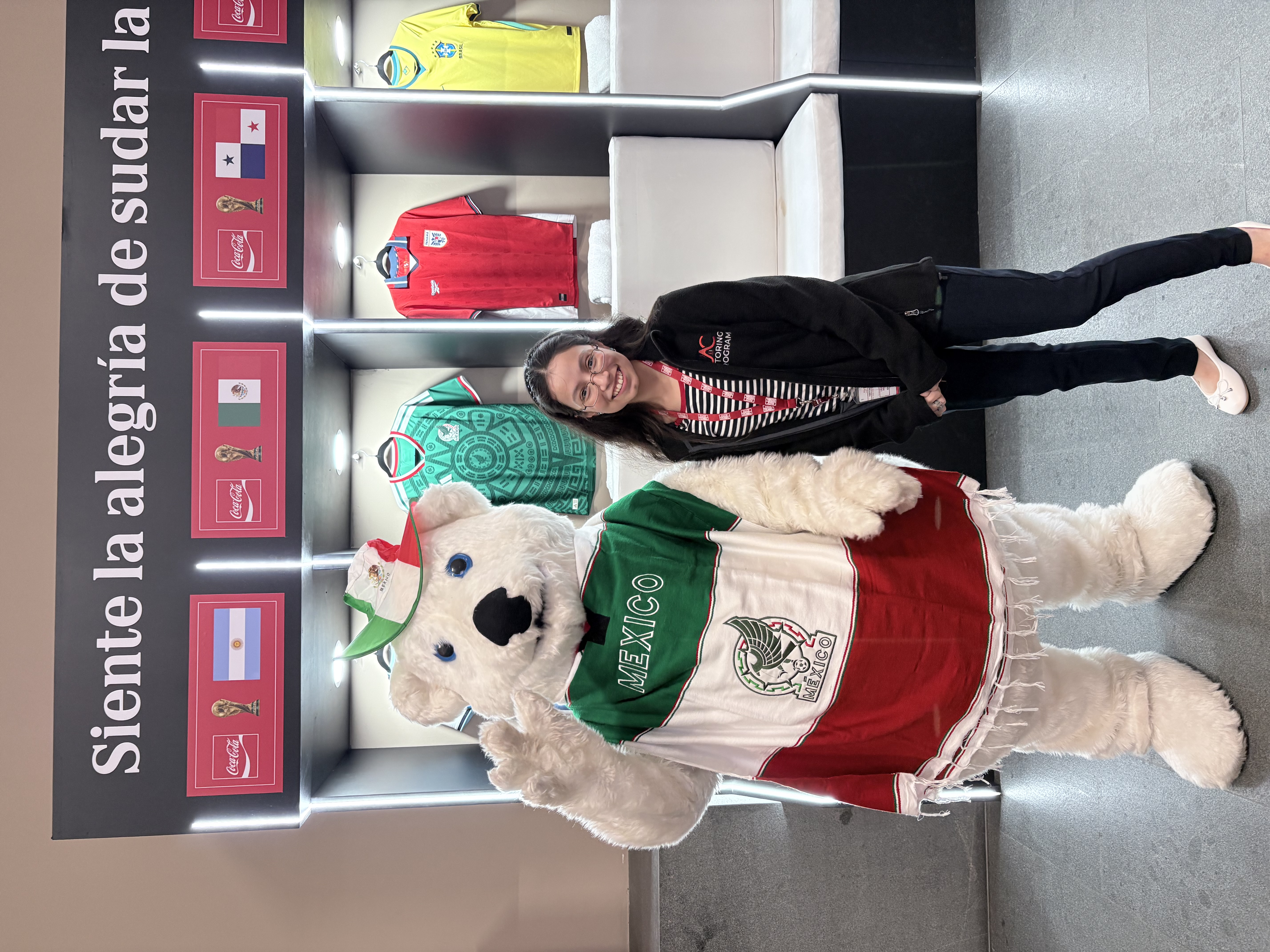
As I scrolled through the list of summer internships in Mexico, one particularly caught my eye. It was an opportunity to do work in machine learning and analytics at Coca-Cola FEMSA (KOF, for short), a bottler of the Coca-Cola company that serves 10 Latin-American countries. I immediately knew that this would be a great opportunity for me to apply and refine my mathematical reasoning and computational skills. I was also excited to see what Mexico City, the city where my mother grew up, would offer. Furthermore, with part of the World Cup happening in Mexico, I was certain that I would have a culturally rich experience.
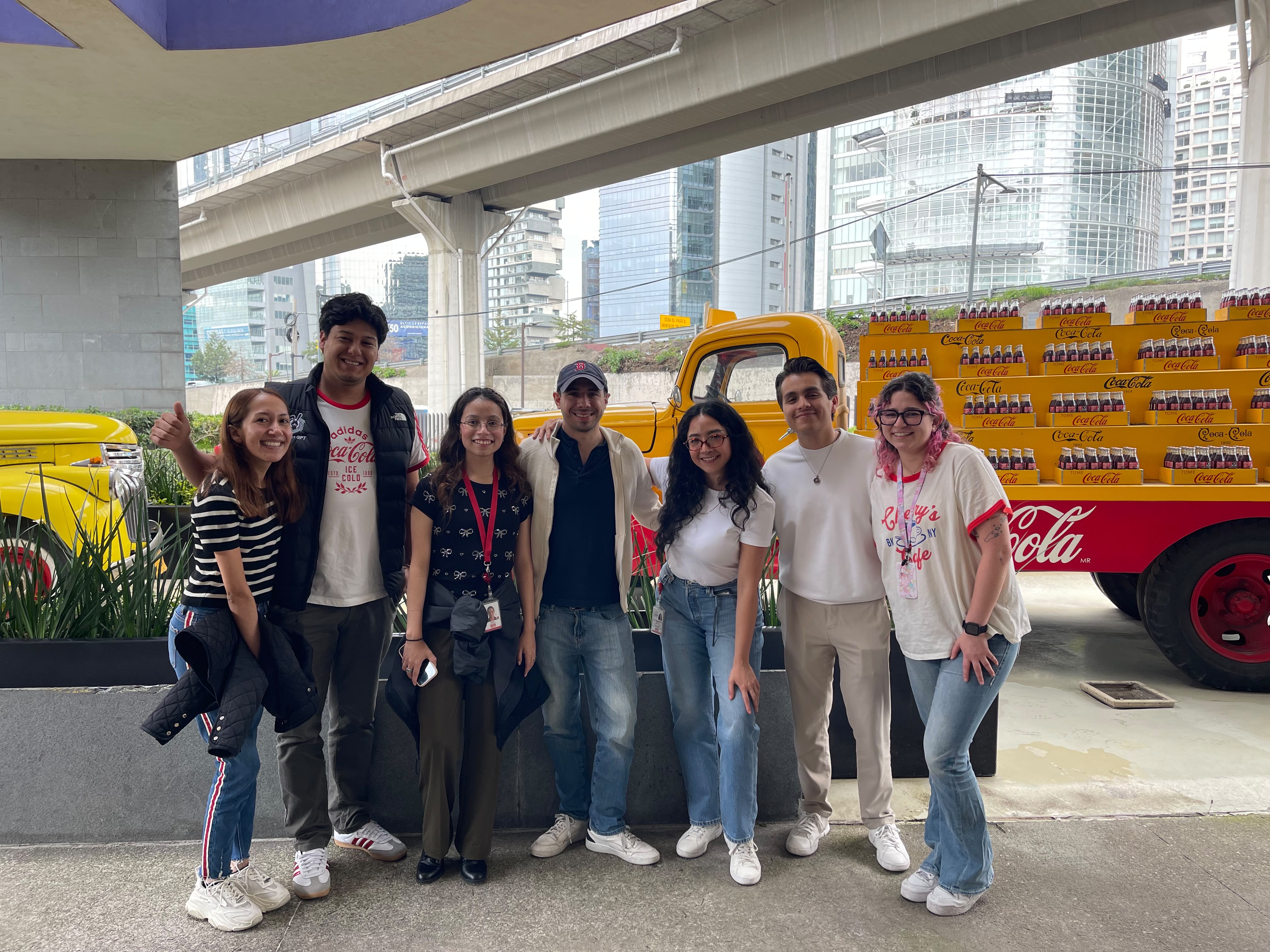
When I arrived at the company, I was welcomed into a team of brilliant people who design and produce tech-driven solutions for KOF at the AI Factory, managed and led by David Hernandez. I was mentored by Dr. David Castro, an executive on the team. After learning more about the company and its operations, I took on a solo project in product substitution. I was specifically tasked with building an algorithm that would link SKUs to its substitutes.
This project enabled me to grow immensely in technical skills: I learned SQL, gained more experience working with databases, and improved my Python abilities. However, a significant portion of what I learned during this experience came from working with the team. I was invited to sit in on important conversations, observe productive conflict, and learn about the initiatives that the team was developing to incorporate state-of-the-art technology. I was also invited to shadow my mentor and witness his leadership and his approach to taking a solution from conception to production. I am very thankful that the team encouraged me to grow in all of these dimensions.
My time in KOF is one that I will cherish, and I am very lucky to have had such a rewarding and pleasant experience for my first corporate role. I only have great things to say about my mentors and teammates. The eight weeks felt really short, but the memories and the learning will last me a lifetime.
Beyond MIT
I graduated from MIT this past May, and I consider these three experiences to be the highlight of my time as an undergraduate. Through them, I not only learned about who I want to be, but I also discovered so much about who I am.
I walked the same streets that my mother once did, tried all the antojitos, lost my mind every time Mexico scored a goal, and explored a bit of the endless beauty that is characteristic to Mexico. Beyond the food and the beautiful places, what kept me coming back to Mexico was the people that I encountered. I laughed and smiled countless times and saying goodbye was always the most difficult part of each journey.
My Mexican heritage has always been a huge part of my story and identity, and thanks to MISTI, I got to make Mexico my home.